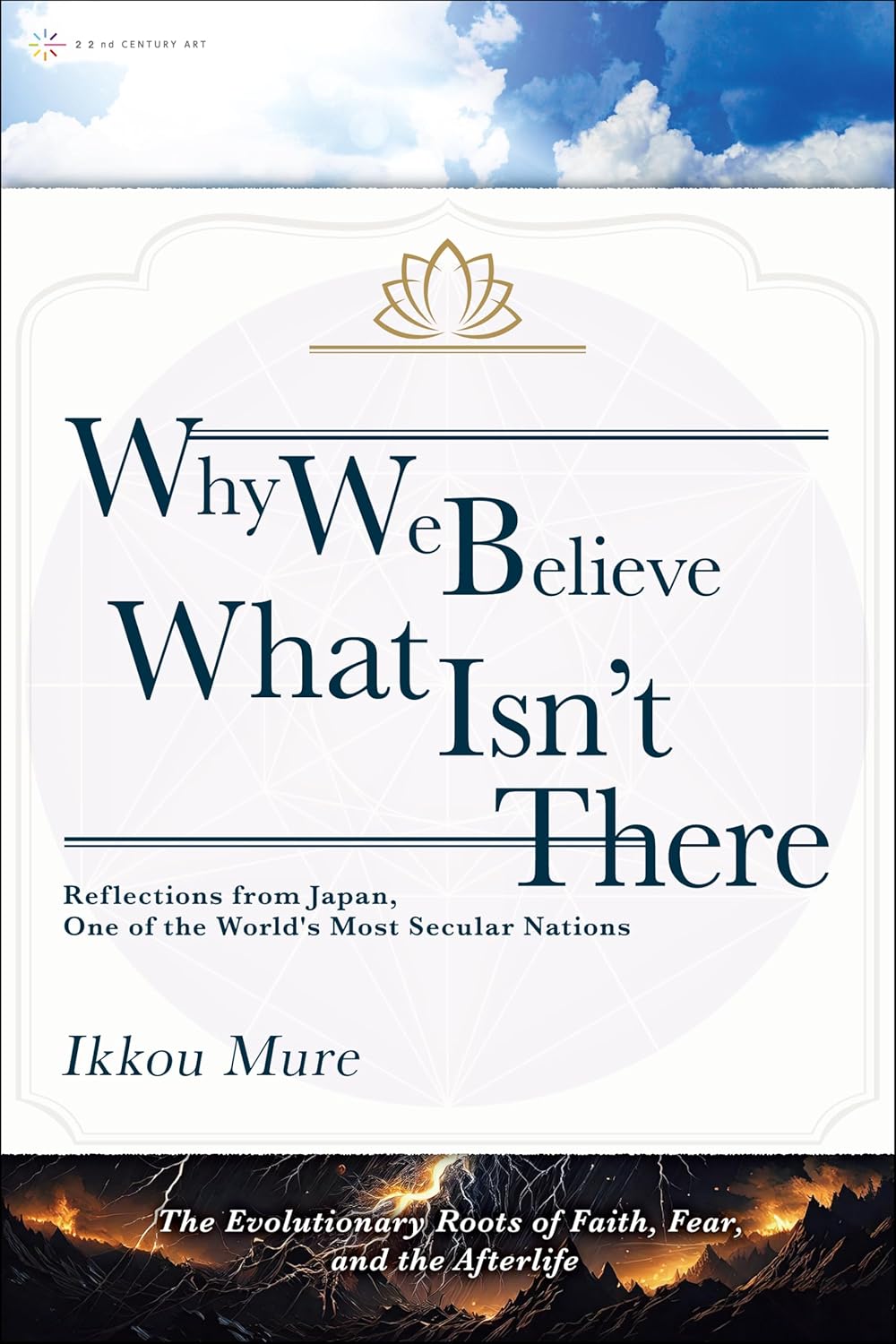
Why We Believe What Isn’t There: Reflections from Japan, One of the World's Most Secular Nations
(著) 群一考
Amazon作品詳細
[About the Book]
—Is religion humanity’s greatest fiction?—
Why do we believe in things that cannot be seen or proven? This book traces the history of human evolution and civilization to explore the origins and meaning of supernatural beings—such as gods and spirits—from a scientific and objective perspective.
Coming from Japan, often described as “one of the most secular countries in the world,” this perspective offers fresh and thought-provoking questions for societies where religious worldviews remain deeply rooted. With this book, readers are invited to reflect on the meaning of believing in the “unseen world”—gods, spirits, heaven, and hell.
Through discussions on the origins of life, the history of human civilization, and the relationship between society and the human mind, this book addresses timeless questions: What is God? What does it mean to be human? A must-read for the modern age.
[Table Of Contents]
Introduction
Chapter 1 What the Fairy Tale “The Emperor’s New Clothes” Reveals Becoming the Embodiment of a Child Amid the Crowd
Chapter 2 Does “God” Exist? ―When Did Faith in “God” Begin?
Chapter 3 The Laws of Nature The History of Earth and Life, and the Origins of Humankind
Chapter 4 “The Three Revolutions of Humankind” and the Modern AI/SNS Revolution
Chapter 5 “God” Is a Fiction Devised by Humankind —Did We Invent an All-Powerful Deity Through an Anthropocentric Lens?
Chapter 6 Do “Heaven” or “Hell” Exist? — “Heaven” as a “virtual space” depicting the “paradise” after death (a virtual world)
Chapter 7 Do “spirits” and “nature spirits” exist? And what about the “soul”?
Chapter 8 Is There an Afterlife?
Chapter 9 How Should We Engage with a Diverse Society?
Afterword
References
About the Author
[Editor’s Comment]
One of the great distinctions between humans and other living beings is the ability to imagine an unseen world. In this sense, exploring questions such as “Why do people believe in gods or heaven?” also leads to a deeper understanding of what it means to be human. Through this book, we invite you to enjoy the challenge of engaging with this profound and universal theme.
[About the Author]
Ikkou Mure
Although he has authored a book in one branch of human developmental science, he has no professional background in this field, so he chose to use a pen name. Former university professor (Japan)
新刊情報