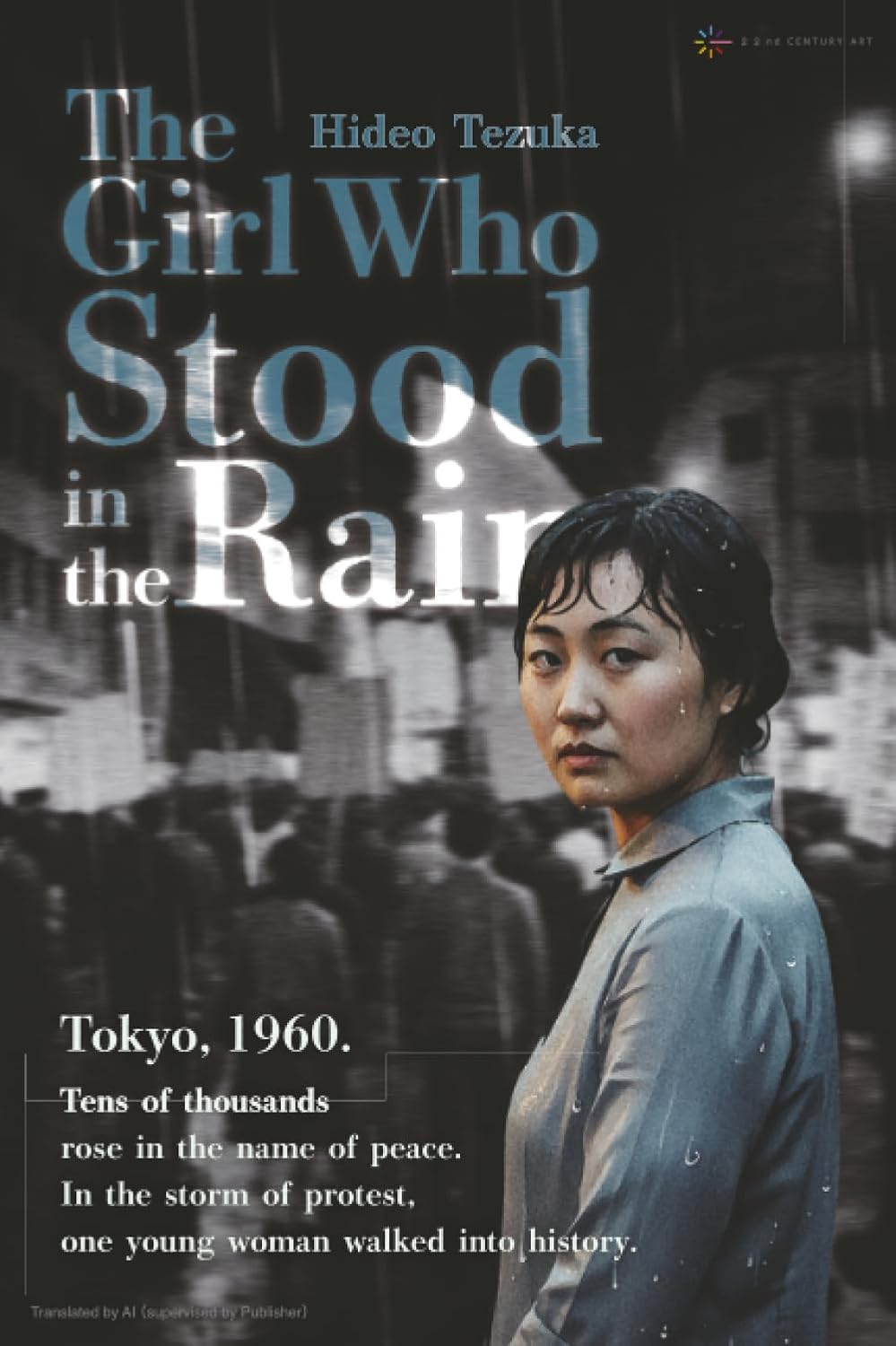
The Girl Who Stood in the Rain
(著) 手塚英男
Amazon作品詳細
[About the Book]
The 1960 Anpo Protests shook postwar Japan.
Amid the turmoil, a female University of Tokyo student—Kanba Michiko—lost her life in a clash with riot police. Her death, the first case in postwar Japan of a “political demonstration casualty,” sent shockwaves throughout the nation.
This book is an autobiographical novel written by an author who lived through that same era—sometimes influenced by Kanba, sometimes engaging in fierce arguments with her. It vividly and dramatically portrays the ideals and struggles of those turbulent days.
What did she hope for?
What did she believe in as she continued to stand in the rain?
A work that deeply explores the light and shadow of living for one’s ideals, as well as the conviction and loneliness inherent in being human.
[About the Author]
Hideo Tezuka
Born in 1939 in Matsumoto, Shinshū.
Entered the University of Tokyo, Humanities II, in 1957. Took part in settlement-house work and, together with the late Michiko Kanba and others, frequently joined the student movement. Fought in the 1957 struggle against expansion of the Sunagawa base and in the 1960 Anpo Struggle.
After graduating in 1962 from the Faculty of Education (Social Education major), became a staff member of the Board of Education in his hometown of Matsumoto, engaging in on-the-ground social-education work at community centers and the like. Supported learning, cultural, and sports movements and reading circles for youth, women, and the elderly in the community. Served as director of the Agata no Mori Cultural Hall, the Working Youth Home, the General Social Welfare Center, Nannan Hiroba, the Central Library, and the City Museum, and retired in 1998.
During that time, served as editor/publisher of Shinshū Elders’ Newsletter (35 volumes of writing by seniors in Shinshū).
After retirement, as an ordinary citizen, he took part in residents’ movements opposing the city’s large “box” projects and the Heisei mergers, and worked on producing a “citizens’ white paper on finances.”
Major authored and edited works include Community Building through Learning, Culture, and Volunteerism; A Lively Human Declaration from Age 65; Miyako / Mitoshi’s Old Tales; A History of Community Center Activities in Nagano Prefecture; A History of Community Center Activities in Matsumoto City; A History of the Youth Movement in Matsumoto City; and The Spell Called Hōanden. Poetry collections: Grove of Great Trees; Grove of Torrential Rain; a poetry collection by persons with disabilities, The Silk Tree; a picture book, Spring Came to the Mountain; and kamishibai picture-story shows A Patch of March Sun—A Homeless Man’s Library Story and We Are First-Graders at Kaichi National School (a work depicting the national school under wartime; he performs as a kamishibai “jiji” (grandpa)). Shinshū / Matsumoto—The Work of a Social-Education Staffer: Reprinted Practical Reports by Hideo Tezuka (13 volumes planned; 8 published to date) collects his reports previously published in newspapers and magazines. He also publishes a personal newsletter, Tonton’gū Dayori (64 issues published).
From Dōjidai-sha he has published the two-volume collection of medium and short stories Yoi Jūmu (Drunken Ten Dreams) and the six-volume booklet series Nihon Rōminkō (Reflections on Japan’s Old Folk)
新刊情報