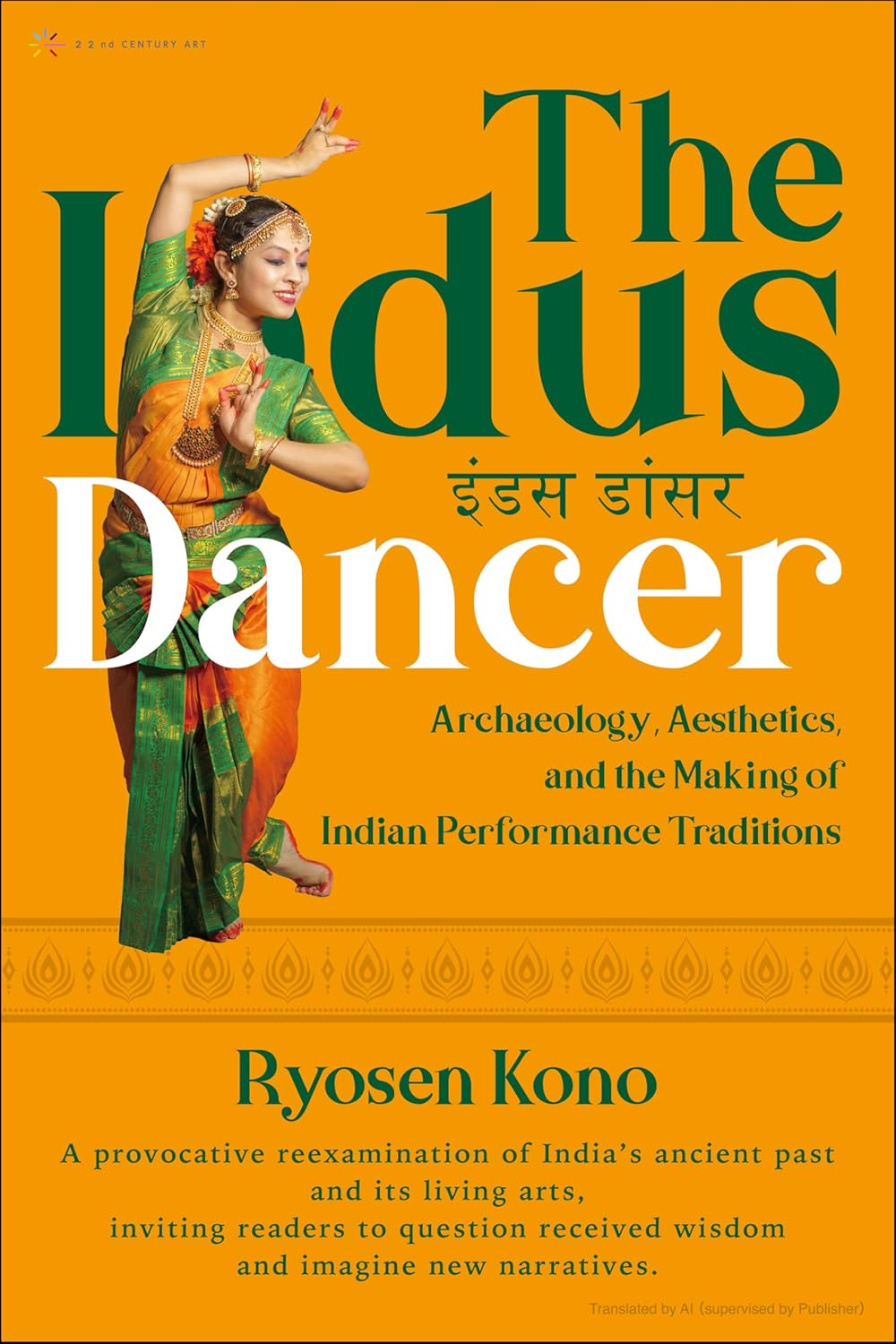
The Indus Dancer: Archaeology, Aesthetics, and the Making of Indian Performance Traditions
(著) 河野亮仙
Amazon作品詳細
[About the Book]
Where did Indian dance come from, and where is it heading?
The origins of dance trace back to the gestures of offering, the undeciphered Indus script, and the enigmatic Indus civilization.
This book presents a bold attempt to reexamine the essence of Indian dance and civilization through an interdisciplinary lens—spanning archaeology, anthropology, religious studies, and aesthetics.
Unbound by established theories, it interprets history and performing arts from multiple perspectives.
A valuable resource for students and scholars interested in Indian studies, South Asian cultural history, world dance and theater, and comparative arts—as well as for anyone wishing to explore “India” from a fresh and unconventional viewpoint.
Written with humor and clarity, the book reads like a lively university lecture, making the cultural and historical world of Indian dance both accessible and deeply engaging.
[Author Biography]
Ryōsen Kōno
Born in 1953. Graduated 1977, Faculty of Letters, Kyoto University (History of Indian Philosophy). 1979-82: M.A. studies in Philosophy & Religion at Banaras Hindu University. 1983: Completed the doctoral program coursework at Taishō University and withdrew upon completion of the required credits (left the program without a degree). Resident priest of Enmei-ji (Tendai sect); secretary of the Japan–India Cultural Exchange Network https://tsunagaru-india.com/. Author of Kathakali Kaleidoscope (Hirakawa Shuppansha) and many other works and articles. Conducts research on Indian culture, religion, ritual, and the performing arts. Recently focuses on producing the “New Bugaku-Hōe,” an event combining Shōmyō chant with Indian dance.
新刊情報