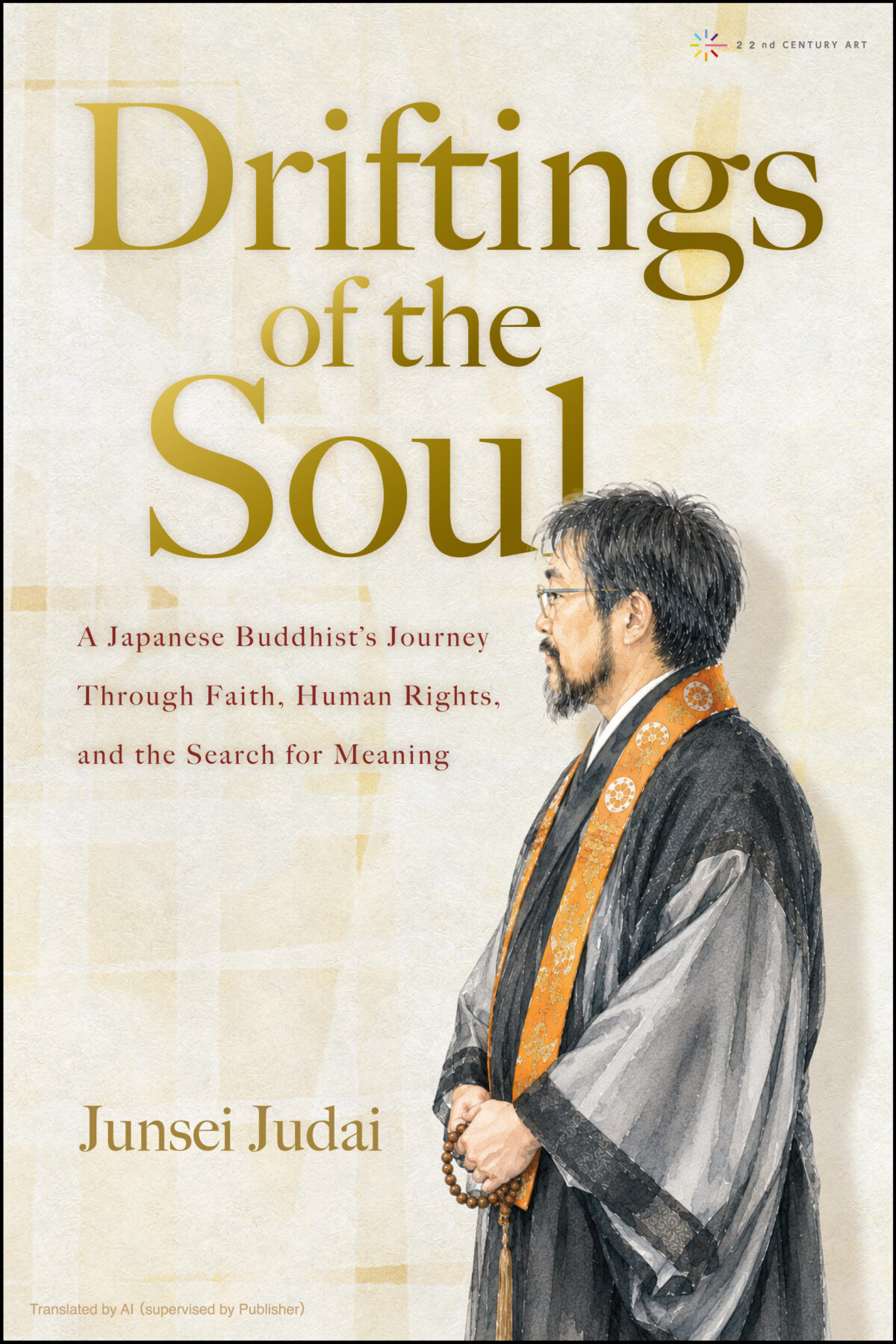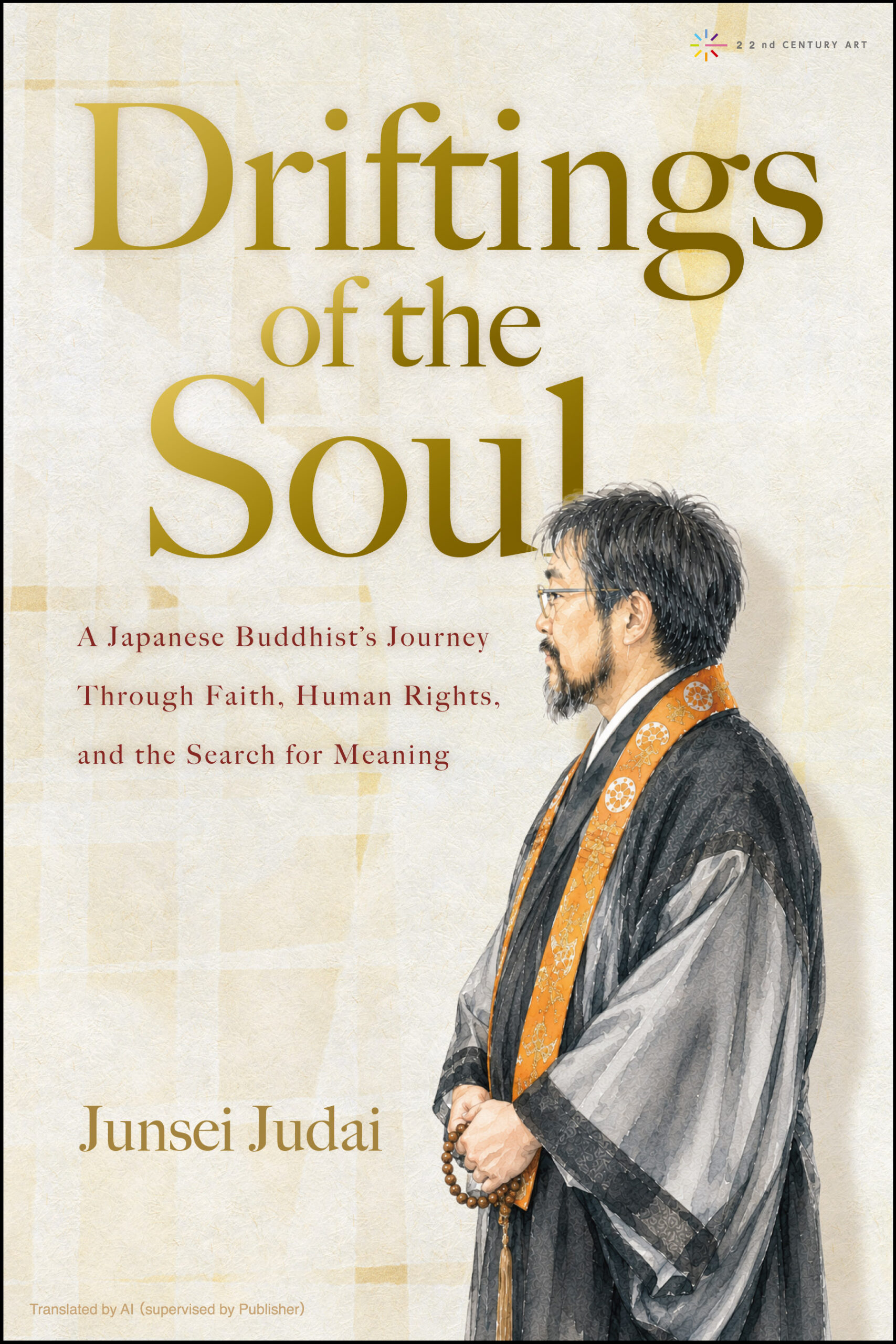
Driftings of the Soul: A Japanese Buddhist’s Journey Through Faith, Human Rights, and the Search for Meaning
(著) 寿台順誠
Amazon作品詳細
[About the Book]
War, discrimination, religion, politics, bioethics—
How did one Buddhist practitioner live through the turbulent postwar years in Japan?
Born in 1957 into a temple belonging to the Ōtani-ha branch of Jōdo Shinshū (Shin Buddhism), the author became involved in social activism in his youth, confronting issues surrounding Yasukuni Shrine, buraku discrimination, and the memory of the Battle of Okinawa.
He later gained firsthand experience in the world of politics as a secretary to a member of the National Diet, and went on to pursue research into human rights and constitutional issues, Japanese Buddhism, and bioethics.
Through the author’s own life of “drifting,” this autobiographical philosophical essay continues to ask fundamental questions:
What do people believe in as they live their lives?
How should we face suffering?
What does human dignity mean?
Drawing on his own experiences, the author explores a wide range of themes, including:
・Social activism and Buddhism in postwar Japan
・The relationship between human rights and religion
・Family funerals and contemporary society
・Bioethical issues such as brain death, euthanasia, and prenatal diagnosis
・The Buddhist concept of “birth, aging, illness, and death”
The book also candidly recounts deeply personal experiences—the death of his father, divorce, his struggles with issues of discrimination, illness and aging, and saying farewell to his mother. In this sense, it can also be read as a record of one person’s suffering, searching, and journey through life.
This book will appeal not only to readers interested in Buddhism and Japanese culture, but also to those who:
・Want to reflect on the meaning of life
・Are interested in the relationship between religion and society
・Enjoy spiritual nonfiction and memoirs
A thought-provoking work that offers many insights into the individual, society, religion, and the meaning of life.
[Author Biography]
Junsei Judai
He was born into the family of Shōunji Temple, affiliated with the Shinshū Ōtani-ha school, in Nakagawa Ward, Nagoya.
After graduating from the Department of German Literature in the First School of Literature at Waseda University, he served as a priest at Shōunji Temple. In April 1982, while continuing his duties there, he transferred to the Department of Buddhist Studies in the Faculty of Literature at Dōhō University, where he studied Buddhism, particularly Jōdo Shinshū.
After graduating from Dōhō University, he served at several temples in the Kansai region and participated, as a Buddhist priest, in a range of social initiatives addressing issues such as Yasukuni Shrine and discrimination against the Buraku community. He subsequently served as chief publicly funded secretary to Masatoshi Ito, then a member of the House of Councillors, and worked on various issues concerning peace and human rights, including Japan’s participation in United Nations Peacekeeping Operations and postwar compensation.
After leaving that position, he studied international law in the master’s program at the Graduate School of International Economic Law, Yokohama National University, and constitutional law in the doctoral program at the Graduate School of Law, Hitotsubashi University. During this period, he entered Kōsaiji Temple of the Hongwanji-ha school of Jōdo Shinshū, transferring from the Shinshū Ōtani-ha school. He later became the temple’s resident priest and eventually handed the position over to his successor. He is currently the former resident priest of Kōsaiji Temple.
More recently, he studied bioethics in the master’s program at the Graduate School of Human Sciences, Waseda University, and Japanese cultural studies in the doctoral program at the university’s Graduate School of Social Sciences.
新刊情報