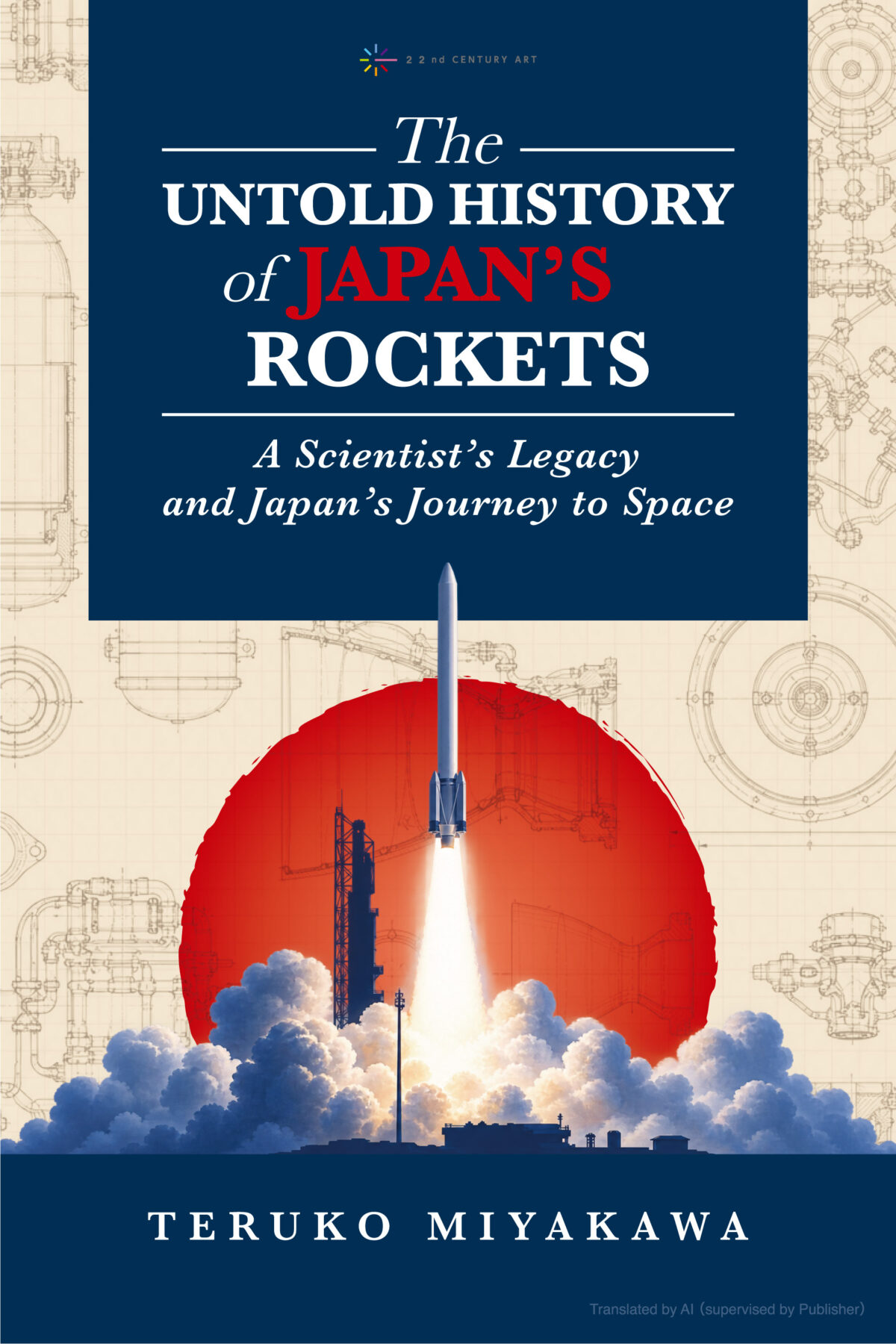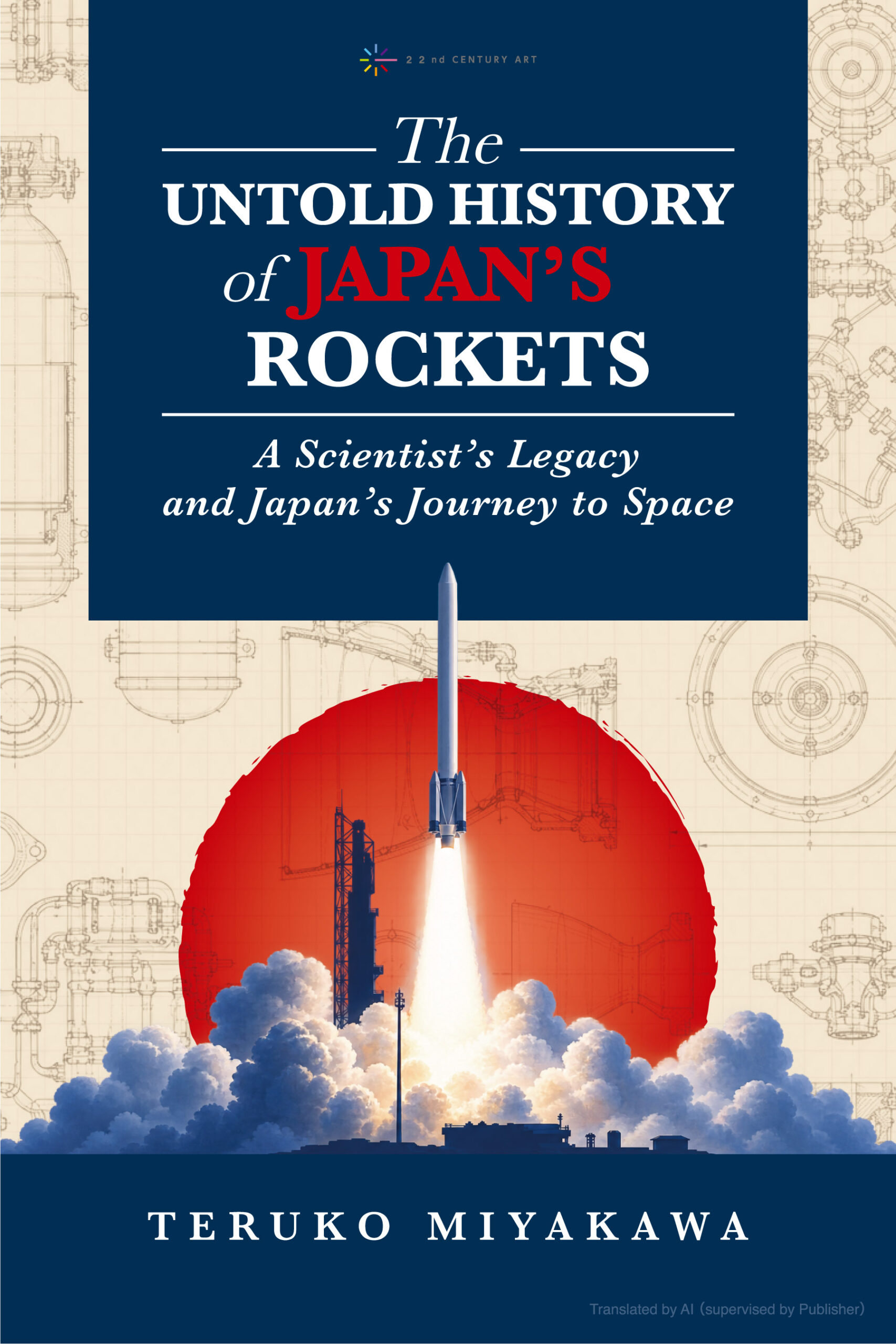
The Untold History of Japan’s Rockets: A Scientist’s Legacy and Japan’s Journey to Space
(著) 宮川輝子
Amazon作品詳細
[About the Book]
Did Japan’s rocket development really begin with the “Pencil Rocket”?
This book offers a fresh perspective on the history of Japan’s space development, tracing the achievements of Yukio Miyagawa, a scientist who devoted his life to Japanese rocket research. Drawing on her husband’s career and a wealth of historical documents, the author, his wife, sheds light on a lesser-known side of Japan’s journey into space.
The book highlights the fact that Japan had already developed advanced aviation and rocket technologies before and during World War II. However, research was interrupted by Japan’s defeat in the war. In the years that followed, the country once again set its sights on space.
The author pays particular attention to rocket development carried out at the Institute of Aeronautical Technology, later known as the National Aerospace Laboratory of Japan (NAL). Research into liquid-fuel rockets continued there, eventually contributing to the development of Japan’s N-I, N-II, H-I, and H-II launch vehicles.
One of the people deeply involved in this research was the author’s husband, Yukio Miyagawa.
He was not a man who sought fame or recognition. Rather than speaking publicly about his achievements, he devoted himself to working with machinery in the laboratory and advancing the technologies essential to rocket engines.
Yet how much is known about the contributions of engineers like him when the history of Japanese rocketry is told?
The author questions the conventional narrative of Japan’s space development, which has largely centered on Hideo Itokawa and the Pencil Rocket. By examining the differences between solid-fuel and liquid-fuel rockets, the technologies carried over from prewar to postwar Japan, and the development programs undertaken as national projects, she argues that important chapters of Japan’s rocket history have yet to be fully told.
In the latter half of the book, the focus shifts to the author’s own life. Following the loss of her eldest son, she began a campaign advocating for the “right to a quiet environment.” The book recounts her longstanding efforts as an ordinary citizen to raise awareness and press government agencies and corporations to address issues involving noise pollution, environmental pollution, roads, railways, and the quality of everyday living environments.
A husband who devoted himself to scientific research.
A wife who never stopped confronting the problems facing society.
What connects their lives is a shared commitment to looking beyond superficial evaluations and established authority, seeking the truth for themselves, thinking independently, and taking action with a sense of personal responsibility.
This book is for anyone interested in space exploration and rocket development; those who wish to learn about the history of Japanese science and technology and the country's postwar reconstruction; readers curious about the contributions of engineers who remained behind the scenes of history; and anyone who wishes to reconsider, from a different perspective, the historical narratives we have come to accept as the truth.
Through the lives of a scientist and his wife, this nonfiction work reveals another side of Japan’s rocket development and postwar society.
新刊情報