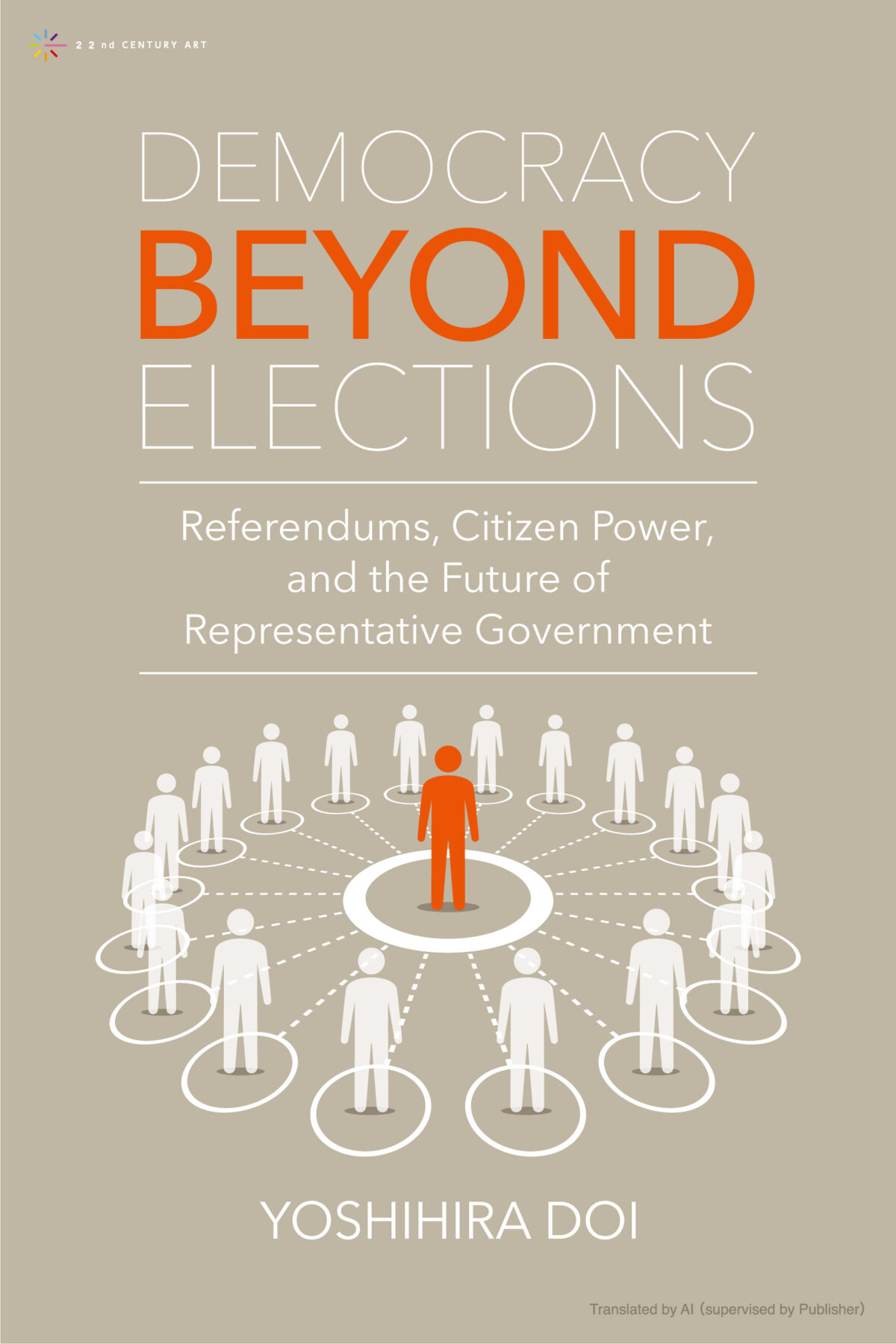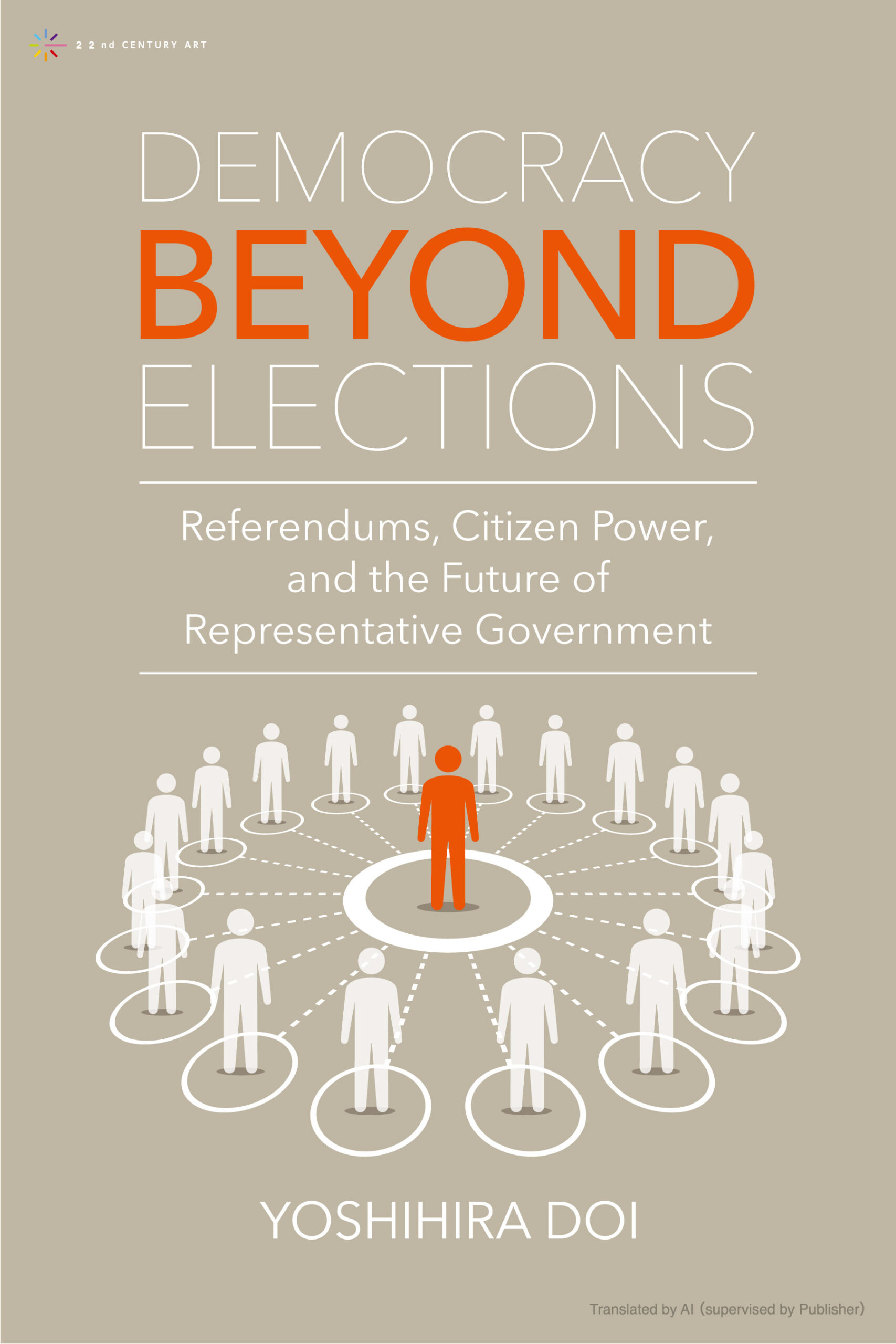
Democracy Beyond Elections: Referendums, Citizen Power, and the Future of Representative Government (English Edition)
(著) 土井淑平
Amazon作品詳細
[About the Book]
Can we truly call ourselves “sovereigns” simply because we elect our representatives through elections?
In modern democracies, much of the political decision-making process is entrusted to governments, legislatures, and political parties. But once an election is over, how much influence do citizens really have over political decisions?
This book reexamines the significance of direct citizen participation in politics through the institution of referendums.
The author first focuses on referendums that have been held in communities throughout Japan. Nuclear power plants, U.S. military bases, waste disposal facilities, public works projects, and municipal mergers—when confronted with issues that shape the future of their communities, how have citizens expressed their views and influenced local governments and assemblies? Through a detailed examination of actual cases, the book reveals both the potential of referendums in Japan and the limitations of the existing system.
The book also compares the systems adopted in countries such as the United States, Germany, and Switzerland. It examines two key mechanisms of direct democracy: the “initiative,” through which citizens themselves propose policies, and the “referendum,” through which citizens directly express their approval or opposition to policies and legislation. How do these mechanisms coexist with representative democracy, and in what ways do they complement it? Drawing on examples of national referendums on nuclear energy policies in various countries, the author explores the possibilities of direct democracy.
The book also turns its attention to the history of democracy itself.
From the city-states of ancient Greece and the free cities of medieval Europe to Swiss town meetings and federalism, it traces the development of democratic thought. Exploring the ideas of thinkers such as Rousseau, Jefferson, Marx, and Hannah Arendt, the author reveals how the principle that citizens should govern themselves has been passed down through the centuries.
The aim of this book is not to reject parliamentary democracy.
Rather, it advocates a system in which citizens do not leave everything to their elected representatives but express their own will whenever necessary. Through this participation, citizens can hold representative democracy accountable, complement its functions, and revitalize the political process.
Does democracy end once we cast our vote on election day?
Or are there other ways for citizens to remain actively involved in politics?
Drawing on examples of referendums in Japan and around the world, as well as thousands of years of democratic history, this book revisits the fundamental question of what it truly means for citizens to be sovereign.
新刊情報