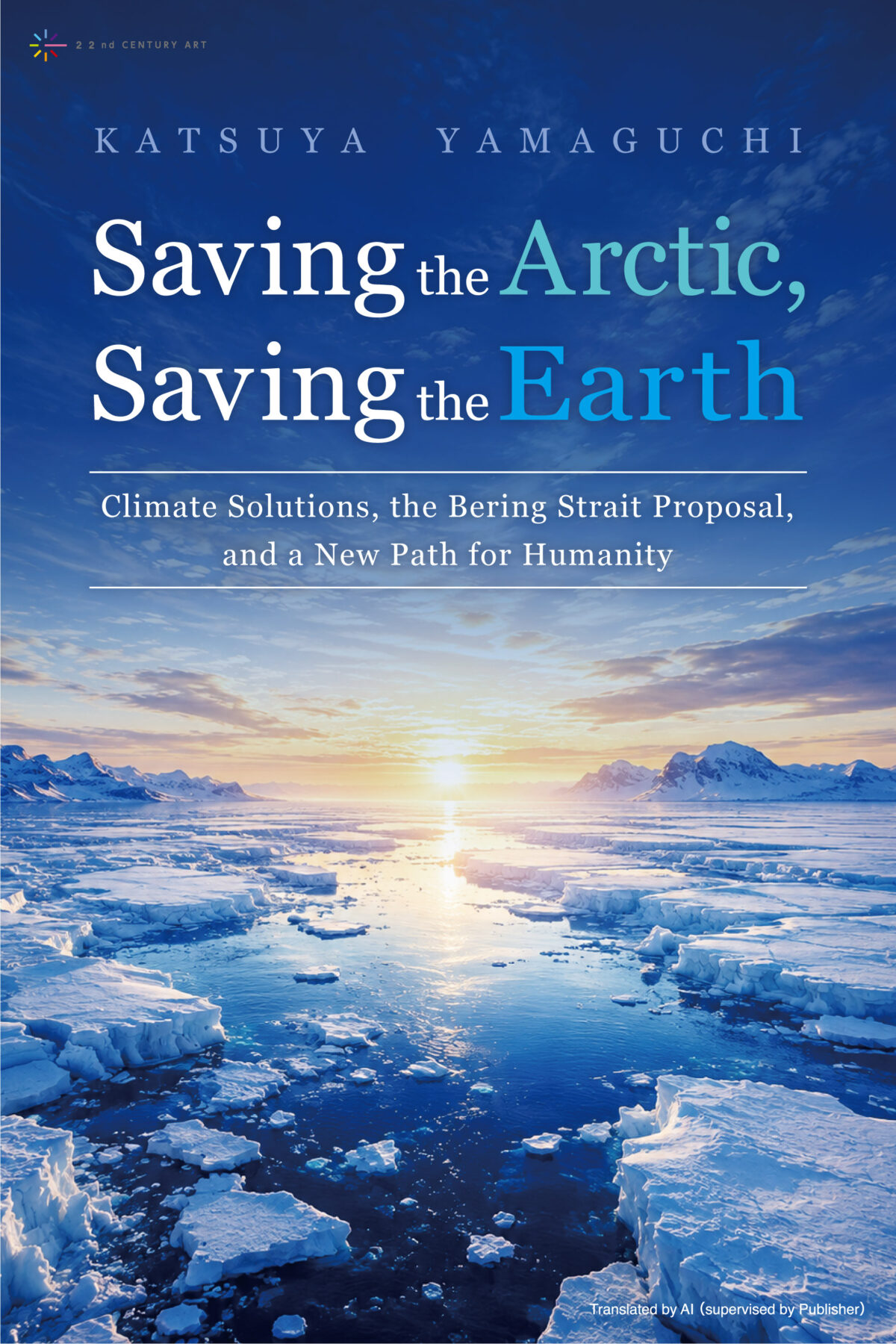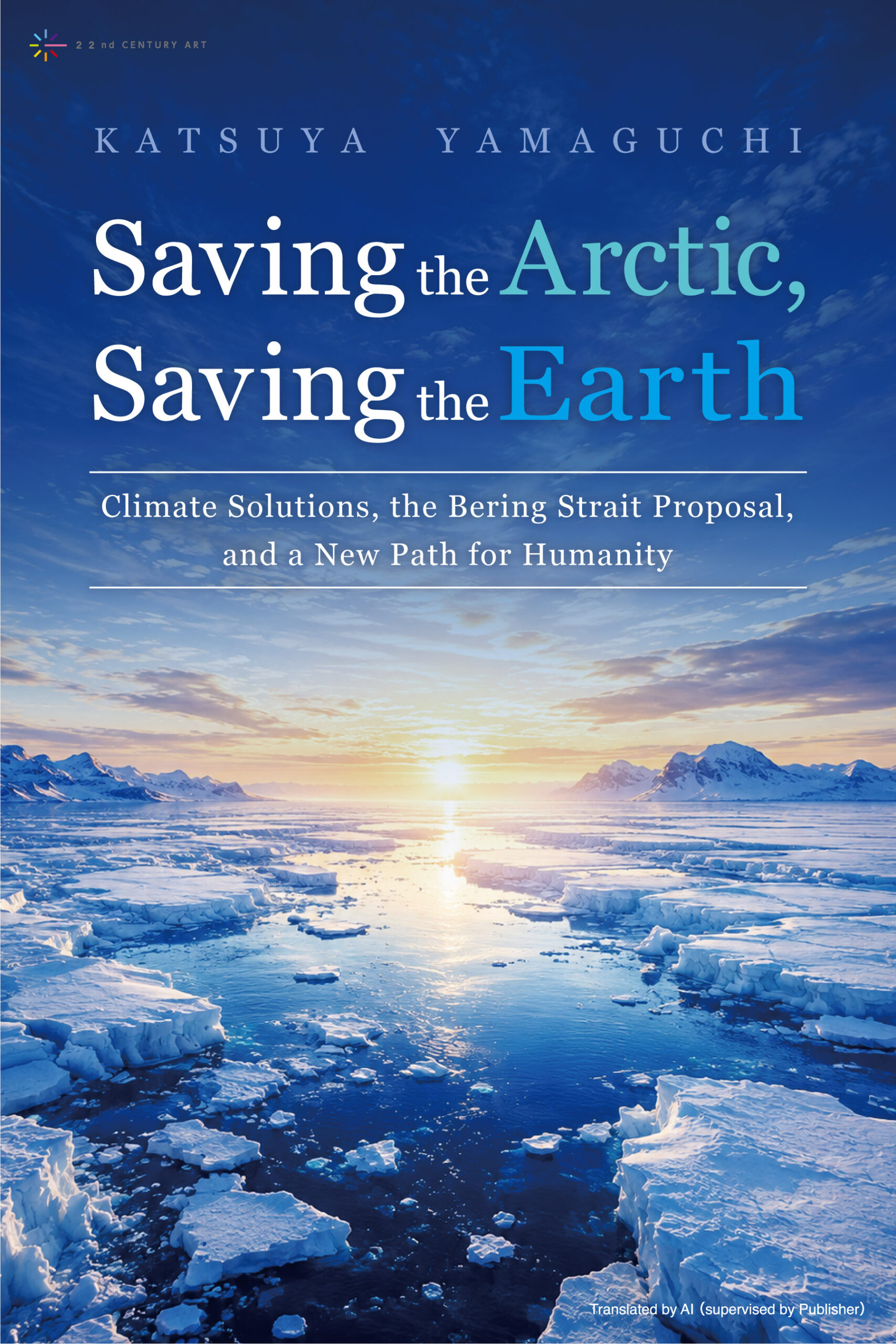
Saving the Arctic, Saving the Earth: Climate Solutions, the Bering Strait Proposal, and a New Path for Humanity
(著) 山口克也
Amazon作品詳細
About This Book
How can humanity overcome global warming?
This book explores one of the greatest challenges of our time from a broad range of perspectives, including science, technology, economics, public policy, international cooperation, and religion.
Beginning with the evidence of climate change—including extreme weather events, devastating wildfires, and the rapid decline of Arctic sea ice—the author explains the current state of global warming and examines why urgent action is needed. The book also introduces practical technologies that can help build a decarbonized society, such as renewable energy, electric vehicles, hydrogen-based steelmaking, next-generation concrete, and carbon capture and storage.
Beyond technological solutions, the book examines international climate policy, including the Paris Agreement, national decarbonization strategies, and initiatives undertaken by businesses and financial institutions. It then presents the author's original proposal for a "World Green Corporation," an international public organization that would manage the world's fossil fuel resources and invest the resulting revenue in renewable energy infrastructure, support for developing nations, climate disaster response, and industrial transformation.
The book also focuses on the rapidly warming Arctic and proposes the bold concept of a "Bering Strait Dam." By reducing the inflow of warm Pacific waters into the Arctic Ocean during summer, the proposal explores whether Arctic sea ice could be restored and global temperature rise moderated. The discussion draws on scientific topics such as ocean circulation, methane hydrates, permafrost, and the polar vortex to examine both the concept and its potential implications.
In its concluding chapters, the book broadens the discussion to include ancient civilizations, religion, and humanity's spiritual heritage. The author also recounts presenting these ideas at the G20 Interfaith Forum, emphasizing that overcoming climate change will require not only technological innovation and effective institutions but also unprecedented cooperation among nations, cultures, and religious traditions.
More than an introduction to climate change, this book offers an interdisciplinary exploration of decarbonization technologies, international climate governance, Arctic environmental challenges, geoengineering concepts, and the relationship between science and religion. It presents bold and thought-provoking ideas about how humanity might shape a more sustainable future.
This book is recommended for readers who want a comprehensive understanding of today's climate solutions, as well as those interested in innovative proposals that go beyond conventional environmental policy.
新刊情報